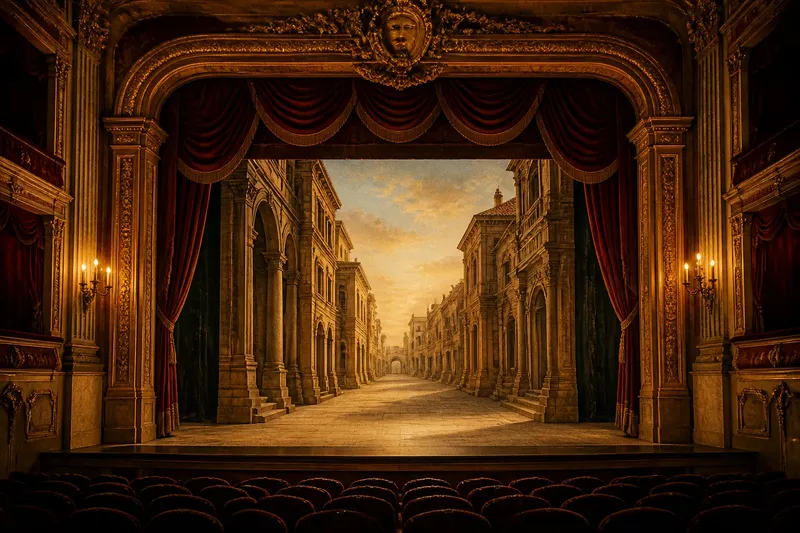
Balcony or Stalls: What Changes with the View?
Balcony or stalls seats change how you read distance, faces, and stage pictures; compare the sightlines before booking to choose a view that suits you.
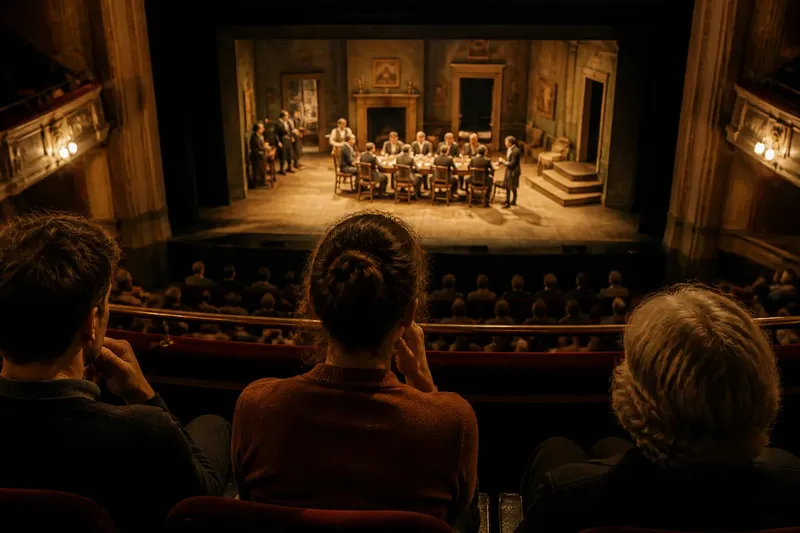
Balcony or stalls: which seat will let you follow the performance more easily? The answer depends less on which level sounds grander than on what you want to see: expressions, movement across the stage, or the full arrangement of bodies and scenery. A little thought before booking can help you choose a view that suits the production and the way you watch.
Start with the stage picture
First, imagine the stage as a composition rather than a row of actors. A scene may depend on faces and small gestures, but it may also ask you to notice who stands apart, how a group shifts, or the way a doorway divides the space. The seating level changes which of those details arrives most readily.
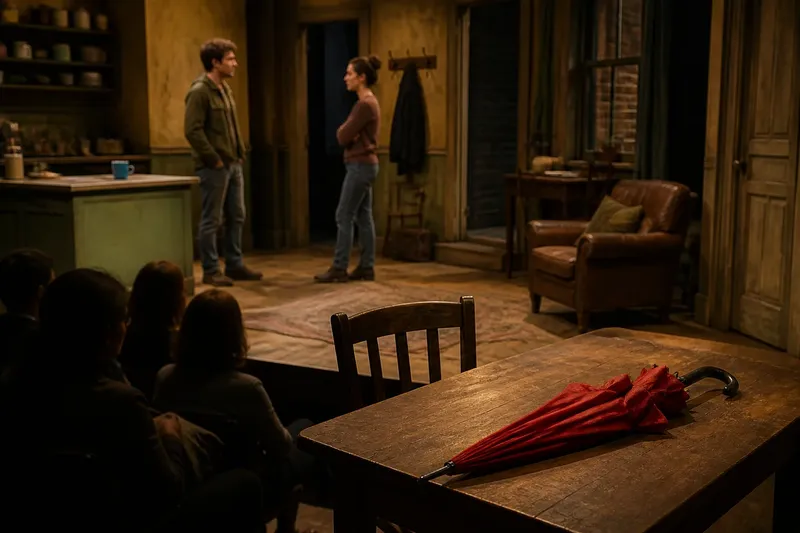
Stalls seats put you closer to performers and often make facial expression feel immediate. The trade-off is that you look upward to some parts of the stage, and your view can be shaped by the people in front. From a balcony, the downward angle can make entrances, formations, and movement across the floor easier to track, while faces may feel less prominent.
Before you choose, look at the theatre’s seating map and identify the stage opening, any projecting platform, and the position of the balcony. A map shows the broad layout, not every sightline, but it can reveal whether a seat is central, far to one side, or tucked beneath an overhang.
Compare distance and angle
Next, decide how close you want to feel to the action. In the stalls, proximity can make a quiet exchange seem intimate and let you notice a performer’s focus or a change in posture. From the balcony, the actors occupy less of your view, but the extra distance can make the whole stage easier to take in at once.
Angle matters as much as level. A central seat generally presents a more balanced view of the stage picture; a side seat can make one side of a set appear compressed or hide activity behind a wall or piece of scenery. This is not automatically a problem: if the important action stays near the center, a side view may still feel clear. Consider the production’s likely movement and set design when that information is available.
Also check whether the balcony overhang affects the stalls. Seats far beneath it may feel enclosed, and the upper part of the stage could be less visible. Conversely, a high balcony seat can offer a steep angle that reveals floor patterns but makes small facial details harder to distinguish. The seating plan or venue’s view notes may help you spot these trade-offs.
Match the seat to the performance
Now think about what the show asks you to follow. A production built around close conversation may reward a seat nearer the performers, especially if you value expressions and subtle reactions. A large ensemble scene, intricate choreography, or a set with several levels may be easier to read from farther back, where the arrangement fits into a single glance.
Sound and sight are related, but not identical. A close seat can make a voice feel direct; a more distant seat may let speech blend with music or the room’s general sound. The theatre’s acoustics and the production’s amplification matter, so don’t assume that the nearest seat is always the clearest one. If understanding dialogue is a priority, check the venue’s access information and seating advice.
Consider the stage’s height, too. From the front of the stalls, you may need to tilt your head to see an elevated platform or the upper part of a tall set. From above, the same scene can be easier to survey, although a balcony rail or the steep angle may affect the lower edge of your view. Look for notes about restricted views rather than relying on “front” or “premium” as a complete description.
Choose by viewing priority
Before selecting a seat, rank your priorities. These questions make the choice more concrete:
- Do faces matter most? Favor a closer, reasonably central stalls seat, while checking that the stage height will not force an uncomfortable upward gaze.
- Do you want the whole formation? Consider a central balcony seat or a seat farther back in the stalls, where group movement may be easier to read.
- Is the set unusually tall or layered? Compare the theatre’s view notes for both levels; the best angle depends on where the action is placed.
- Are you sensitive to people blocking the view? Check the row layout and any information about staggered seating, and consider a position with a less obstructed line toward the stage.
- Does closeness make a performance more engaging for you? Choose the stalls if immediacy matters more than seeing the entire composition at once.
Say you’re choosing for a play with a long dining table across the stage and several conversations happening at once. If you want to track who is listening while another character speaks, imagine a central balcony seat: it may make those relationships and shifts of attention easier to scan. If the appeal is watching a lead performer’s restrained expressions, a central stalls seat may be the better fit. Neither choice is universally superior; each emphasizes a different part of the scene.
Questions before booking?
Are balcony seats always farther away?
Not necessarily in the way that matters to your view. A balcony may sit above and behind the stalls, but theatre layouts vary, and its front rows can feel closer than the map suggests. Check the venue’s plan and any seat-specific view description.
Are stalls seats better for seeing faces?
They can make expressions feel more immediate, particularly from a central position, but distance within the stalls still varies. A very close seat may show only part of a broad stage picture, so balance facial detail against the scene as a whole.
Can a balcony make choreography easier to follow?
Often, an elevated angle helps you see patterns, spacing, and movement across the floor. A very high or far-side position can also make individual gestures less distinct, so consider whether the production’s appeal is ensemble design or close detail.
What does a restricted view mean?
It usually signals that a rail, wall, overhang, or seat angle may block part of the stage. The specific obstruction differs by theatre and seat, so read the venue’s description before booking rather than assuming the missing area will be unimportant.
Make the final comparison
Once you have a preferred level, compare seats within it rather than choosing by label alone. A central seat may offer a more even view than one at the extreme side; a row farther back may reveal more of the stage than a close seat with a steep upward angle. Use the seating map, view notes, and any venue-provided photographs together.
When venue guidance or a seat description identifies a restriction, follow that information; the layout and local access arrangements are specific to the theatre. If you need an accessible position or a particular view accommodation, contact the venue’s box office or access team, which can explain the available options.
Don’t spend hours trying to identify one perfect seat from a generic diagram; it cannot show every head, rail, or production-specific choice. Use the details the theatre provides to settle the main trade-off: the stalls tend to bring faces and gestures forward, while the balcony often makes the stage picture easier to survey. That distinction is the useful starting point for choosing your view.