Why a Pause Can Change the Meaning of a Line
Why a pause can change the meaning of a line: notice how timing, movement, and the words before silence reshape what a character’s reply seems to mean.

Why a pause can change the meaning of a line becomes clear when the same words land first as comfort, then as a threat. Imagine a rehearsal scene about a damaged friendship: Eli asks, “Are you staying?” Mara answers, “I thought you wanted me to.” The words stay fixed; the silence before them does not.
Listen to the pause as an action, not an empty gap. Its meaning grows from what came before, who seems to control it, and where the actors direct their attention. A pause can make a reply sound like an evasion, a plea, or a decision without adding a syllable.
A rehearsal exchange
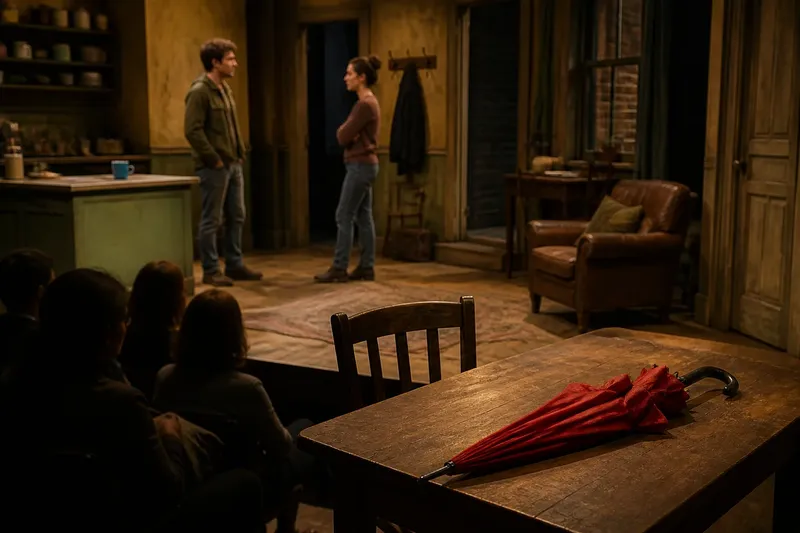
In this invented scene, Mara has packed a coat and set it beside the door. Eli has spent the evening trying to repair an argument. The script gives Eli the question and Mara the reply, but no direction specifies how long to wait or what to do during the silence.
At first, they play the exchange quickly. Eli asks while Mara is turning away, and she answers at once. The line sounds lightly sarcastic, almost like a joke between people who know each other well.
Then the director asks them to let the question reach Mara before she answers. Eli stops speaking. Mara keeps one hand on the coat, looks toward him, and waits. The silence gives the question time to register; her reply now sounds less playful, as if she is checking whether the invitation is genuine.
For another pass, Eli has just admitted that he assumed Mara would leave. He does not look at her when he asks the question. Mara’s delay now seems to hold hurt, and her reply can sound like an accusation rather than a hopeful inquiry.
The shift comes from several cues working together. The audience has heard Eli’s admission, seen his averted gaze, and watched Mara hold the coat. The pause lets those details gather weight before the reply arrives. Without that pressure, a gap may simply feel slow; with it, the next words seem to answer a different question.
What silence changes
A pause can draw attention to an unfinished thought. If a character stops after saying, “I could tell them,” the audience may wait for a reason, a name, or a refusal. The next line can confirm or overturn that expectation.
Silence can also shift attention from speech to behavior. In the rehearsal, Mara’s hand on the coat raises a visible question: is she preparing to go, or holding herself in place? If she releases it during the pause, the movement may suggest a retreat from leaving; if she grips it more firmly, the reply may sound like a defense.
Duration shapes pressure, but it has no fixed emotional code. A brief pause may suggest careful word choice; a longer one may leave the audience wondering whether the character is unwilling or unable to answer, or is waiting for someone else. The surrounding action and relationship guide the reading.
A pause can also change who appears to have control. When someone delays an answer, the questioner must sit with uncertainty, and the responder seems to choose when the exchange continues. But if the responder’s behavior suggests distress, the delay may read as overwhelm rather than power.
Eli’s silence after asking “Are you staying?” differs from Mara’s silence before answering. His pause gives the question room to settle; hers shows her weighing what she heard. If both pauses play alike, the exchange may lose its shifting rhythm.
Reading performance pauses
Listen backward. What was said just before the silence: a confession, a joke, a command, or an ordinary detail that now carries another meaning? The immediate lead-in often gives a pause its charge, while earlier lines provide context.
Physical action matters, but it need not illustrate the dialogue. Mara might straighten the coat, turn toward Eli, or keep facing the door. Straightening it could look practical; turning toward him could invite a response; keeping her back turned could make her reply sound guarded.
Notice where the pause falls. A break before a name can make the name feel difficult to say. A pause after a promise can leave the audience waiting to learn whether the speaker believes it. A silence inside a sentence may expose hesitation or a struggle to continue; one after a complete sentence can let the thought settle.
Voice and focus add further cues. A soft line after a pause may seem intimate, while the same softness after a sharp movement can feel controlled. A fixed gaze can make a silence confrontational; looking away may make it seem private. Read each gesture in context rather than treating it as a fixed signal.
There is also a difference between a wait that seems chosen and one that seems to happen to the character. Deliberate timing may suggest restraint or strategy. A broken rhythm or wandering focus may suggest surprise or difficulty speaking.
What do viewers ask?
How long is a meaningful pause?
There is no fixed duration. A brief silence can carry weight after a revealing line or decisive movement, while a longer one may feel empty if nothing in the moment gives it pressure.
Does a pause always mean hesitation?
No. It may mark listening, calculation, emphasis, grief, refusal, or a shift in control. The words, behavior, and relationship help distinguish those possibilities.
What if viewers read the silence differently?
Different interpretations can coexist. Viewers bring different expectations, while the production’s cues offer material to consider rather than a single answer to decode.
Can a pause make a familiar line sound new?
Yes, if it changes what the listener expects the line to do. A delay can turn a reply into a question about trust or make an ordinary statement sound like a difficult choice.
A worked rehearsal
Say a director is shaping the invented exchange and wants Mara’s reply to sound like a correction. The starting version has Eli ask, “Are you staying?” while Mara holds her coat; she answers immediately. For the next pass, Eli first says, “I didn’t think you’d come back,” then asks the question. Mara sets the coat down, waits, and replies, “I thought you wanted me to.”
The observable result the director is aiming for is a reply that points back to Eli’s mistaken assumption, rather than simply asking for reassurance. If Mara adds a small smile, the correction may also sound tender; if she faces the door and avoids his gaze, it may feel like a boundary. The new sentence and pause create options, not a guaranteed interpretation.
As a viewer, notice when your own expectation forms. You may anticipate an apology, a departure, or a confession. Watch whether the next line fulfills that expectation, resists it, or redirects it.
Listening without overreading
For a clear reading of why a pause can change the meaning of a line, ask what the silence follows, who seems to control it, and where the actors direct attention while it lasts. The interval is not blank space: it is where the audience revises what it expects the next line to mean.
Not every silence needs an elaborate interpretation. A pause that adds no new pressure may simply be a breath or a practical beat, and searching for a hidden clue is not worth the effort. The useful question is simpler: after the silence, do the words feel different from how they would have sounded before it?